
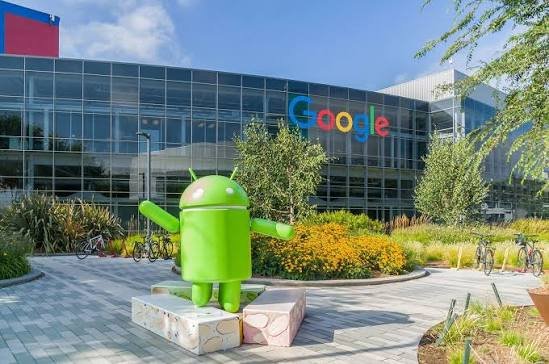
Google Company History: From Garage Startup to Global Tech Giant
Few companies have reshaped daily life the way Google has. What started as a research project between two Stanford PhD students has become the default way billions of people search, communicate, and navigate the internet. Today, Google sits at the center of a trillion-dollar holding company, powering everything from web search to artificial intelligence.
This article traces Google’s journey from its founding to its current position as one of the most influential technology companies in the world — and what’s driving its growth today.
How Google Started
Google was founded in 1998 by Larry Page and Sergey Brin, two Stanford University PhD students who developed a new way to rank web pages based on the number and quality of links pointing to them. Their algorithm, originally called “BackRub,” became the foundation for Google Search.
The Garage Origins
The company was officially incorporated on September 4, 1998, and set up shop in a rented garage in Menlo Park, California. Early funding came from a $100,000 check from Sun Microsystems co-founder Andy Bechtolsheim, written before Google was even legally incorporated — a detail that has become part of Silicon Valley folklore.
Why the Name “Google”?
The name is a play on “googol,” a mathematical term for the number 1 followed by 100 zeros. It reflected the founders‘ mission to organize a seemingly infinite amount of information on the web.
Google’s Early Growth and IPO
Throughout the early 2000s, Google expanded rapidly beyond search. The company launched Gmail in 2004, the same year it went public on the Nasdaq stock exchange. The IPO raised $1.67 billion and valued the company at roughly $23 billion — a number that looks modest compared to its valuation today.
Key Early Acquisitions
Google’s growth strategy relied heavily on acquisitions. Notable early purchases included:
- YouTube (2006) — for $1.65 billion, turning Google into a dominant force in online video.
- Android (2005) — laying the groundwork for what would become the world’s most-used mobile operating system.
- DoubleClick (2007) — strengthening Google’s position in digital advertising.
These deals set the pattern for how Google would build its ecosystem: acquire promising technology early, then integrate it into its broader platform.
The Creation of Alphabet Inc.
In 2015, Google reorganized under a new parent company called Alphabet Inc., separating its core internet businesses — Search, YouTube, Android, and advertising — from more experimental ventures like Waymo (self-driving cars) and Verily (life sciences). Sundar Pichai became CEO of Google, and later took over as CEO of Alphabet as well following Larry Page and Sergey Brin’s step back from day-to-day operations in 2019.
Why Alphabet Was Created
The restructuring gave Google’s more speculative “moonshot” projects room to operate independently, with separate financial reporting, while keeping the core advertising and search business as the primary profit engine. It also gave investors clearer visibility into which parts of the business were driving revenue.
Google Today: Scale and Revenue
Google’s parent company has grown into one of the most valuable businesses in the world. Alphabet’s full-year 2025 revenue surpassed $400 billion for the first time, with growth continuing into 2026 — Q2 2026 alone brought in $119.8 billion in revenue, up 24% year-over-year, driven largely by Search, YouTube, and an accelerating Google Cloud business.
Google Search and Advertising
Search remains Google’s core product and primary revenue driver. The company has increasingly layered AI directly into the search experience through features like AI Overviews and AI Mode, changing how users interact with results.
Google Cloud and AI
Google Cloud has become one of the company’s fastest-growing segments, with demand for AI infrastructure and enterprise AI tools pushing quarterly cloud revenue past $24 billion in mid-2026. Much of this growth is tied to Gemini, Google’s family of AI models, which now process billions of tokens per minute across consumer and enterprise products.
YouTube and Other Bets
YouTube continues to be a major revenue contributor through both advertising and subscriptions, while “Other Bets” — including Waymo — remains a smaller, longer-term investment area still working toward profitability.
What Makes Google Different From Its Competitors
Unlike many competitors that rely on third-party cloud infrastructure, Google operates its own custom hardware and data centers, giving it what the company describes as a “full-stack” approach to AI — controlling everything from chips to models to the products built on top of them. This vertical integration has become a central part of its competitive strategy against companies like Microsoft and Amazon in the cloud and AI space.
Google’s Impact Beyond Search
Google’s influence extends far beyond its own products. Its advertising technology powers a large share of the web’s revenue model, its Android operating system runs on the majority of the world’s smartphones, and its open-source contributions — from TensorFlow to Chromium — shape tools used across the tech industry. For a deeper look at how these products fit together, Alphabet’s investor relations page breaks down each business segment in detail.